WOO X Earn | 2024
Simplifying crypto investing to drive growth
Designed a 0→1 investment product that drove 60% engagement growth and 2× conversion across web and mobile.
fintech
strategy

overview
Build a product that boosts engagement rate and scales
Our team noticed a growing number of entry-level traders but engagement staying low. In this project, I led the design of a beginner-friendly investment experience to help new users confidently get started with crypto.
What I did:
- Defined product direction with PMs and C-level to improve beginner activation
- Simplified investment flows and built scalable interaction pattern
- Validated concepts through rapid prototyping and usability testing
Outcome & Impact:
After launch, user engagement rose 60% and conversion rate hit 11%, double the platform average. The product has since continued to grow, expanding into new investment options.
60%
Engagement increase
2x
Conversion rate vs. baseline
Challenges
Users were signing up, but not sticking around
WOO X offers a wide range of advanced trading tools for professional traders. As the company scaled, we noticed a growing group of novice investors entering the platform. With only 12% monthly engagement, we saw an opportunity to design an entry-level product that brings beginners into the ecosystem.
How might we design an intuitive investment experience that engages beginners and drives ecosystem growth?
Design Goals
Balancing simplicity and scalability
Two core goals guided the design:
User goal
Make crypto investing approachable for traders with different experiences.
Business goal
Broaden the product sets to drive deeper engagement in the WOO X ecosystem.
process - Initial Design Approach
Designing the tier-based reward system
I designed core investment flows: lock funds for a set period and earn returns. To drive engagement, I also introduced a tier system where higher-tier users could invest larger amounts in Earn products. Then I created a prototype to validate my design concept in early stages.
Hypothesis:
Users would upgrade their tiers to unlock higher caps, driving adoption of Earn products and deeper platform engagement.
Investment Flow Prototype
process - UX Refinement 01
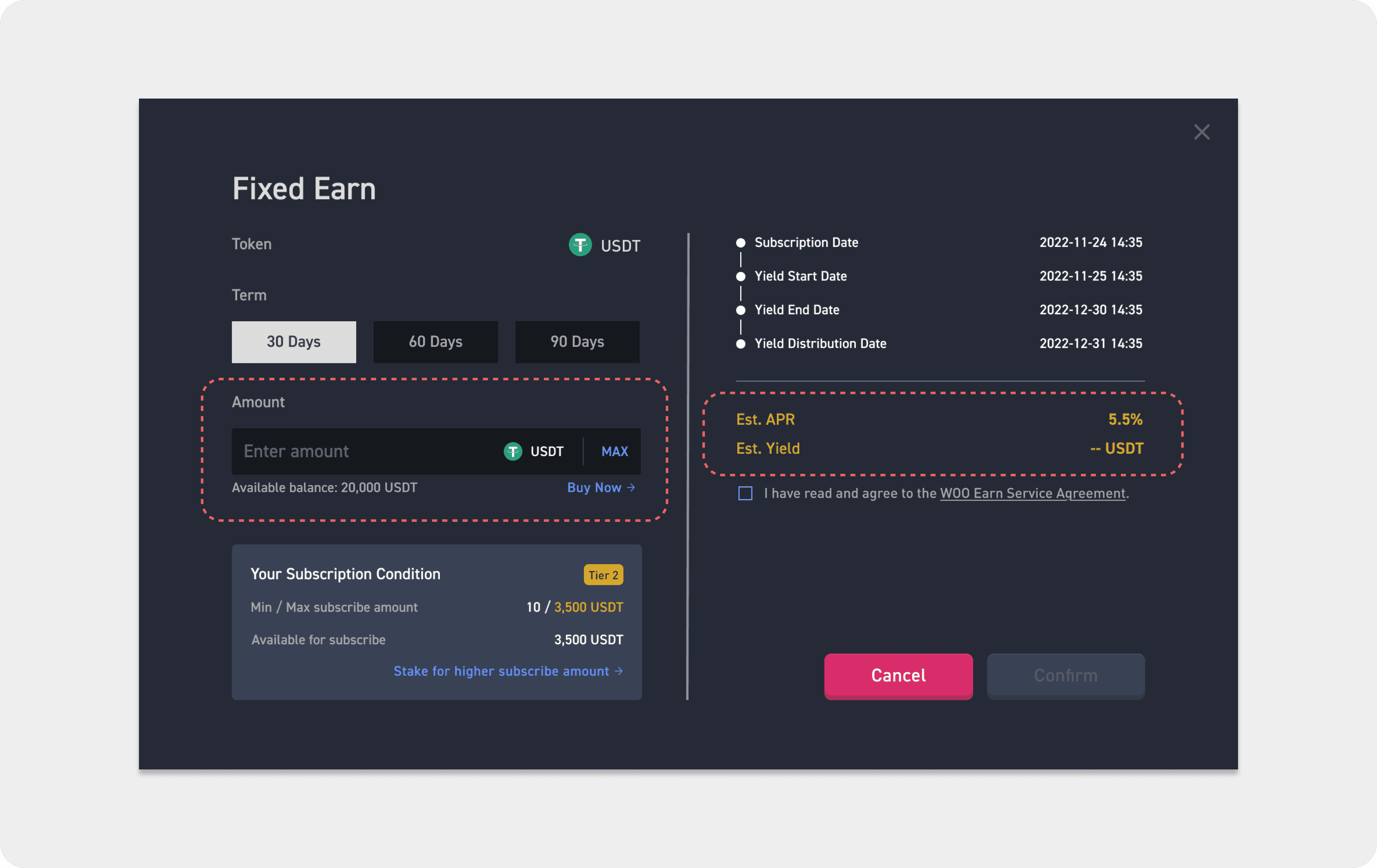
Users missed feedback on amount entry
Before
When users entered an amount, the APR and yield were displayed too far from the input field, making feedback hard to spot. Additionally, the button UI closely resembled text fields, creating confusion about what was actionable.
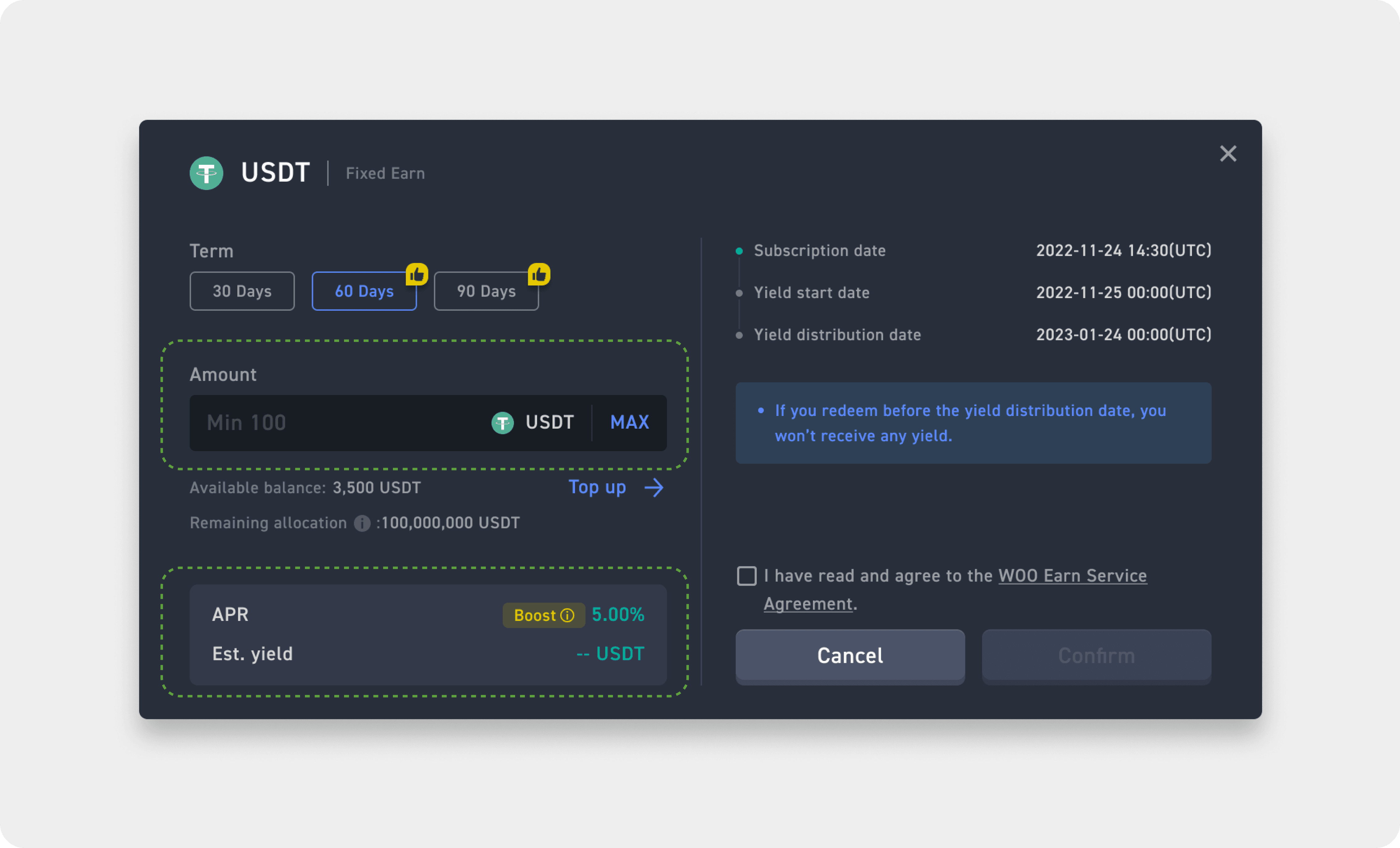
After
I moved the estimated APR and yield directly below the input field for immediate visibility and refined the button styling to clearly differentiate it from text fields.
process - UX Refinement 02
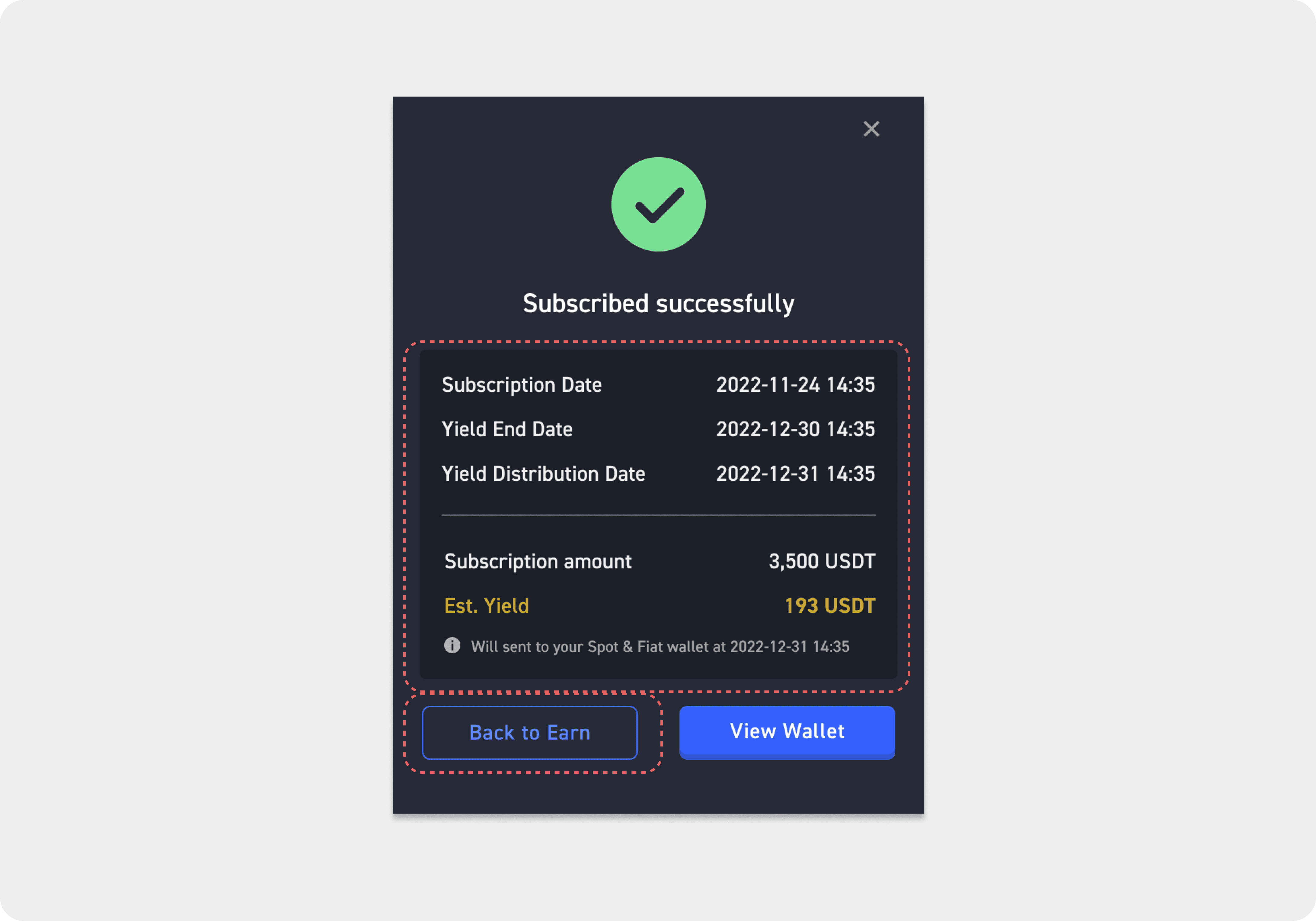
Success page overwhelmed users with redundant data
Before
The success page repeated dates already shown in previous steps (subscription date, yield end date, distribution date), adding cognitive load without value. The CTA "Back to Earn" was vague, leaving users unsure of the next action.
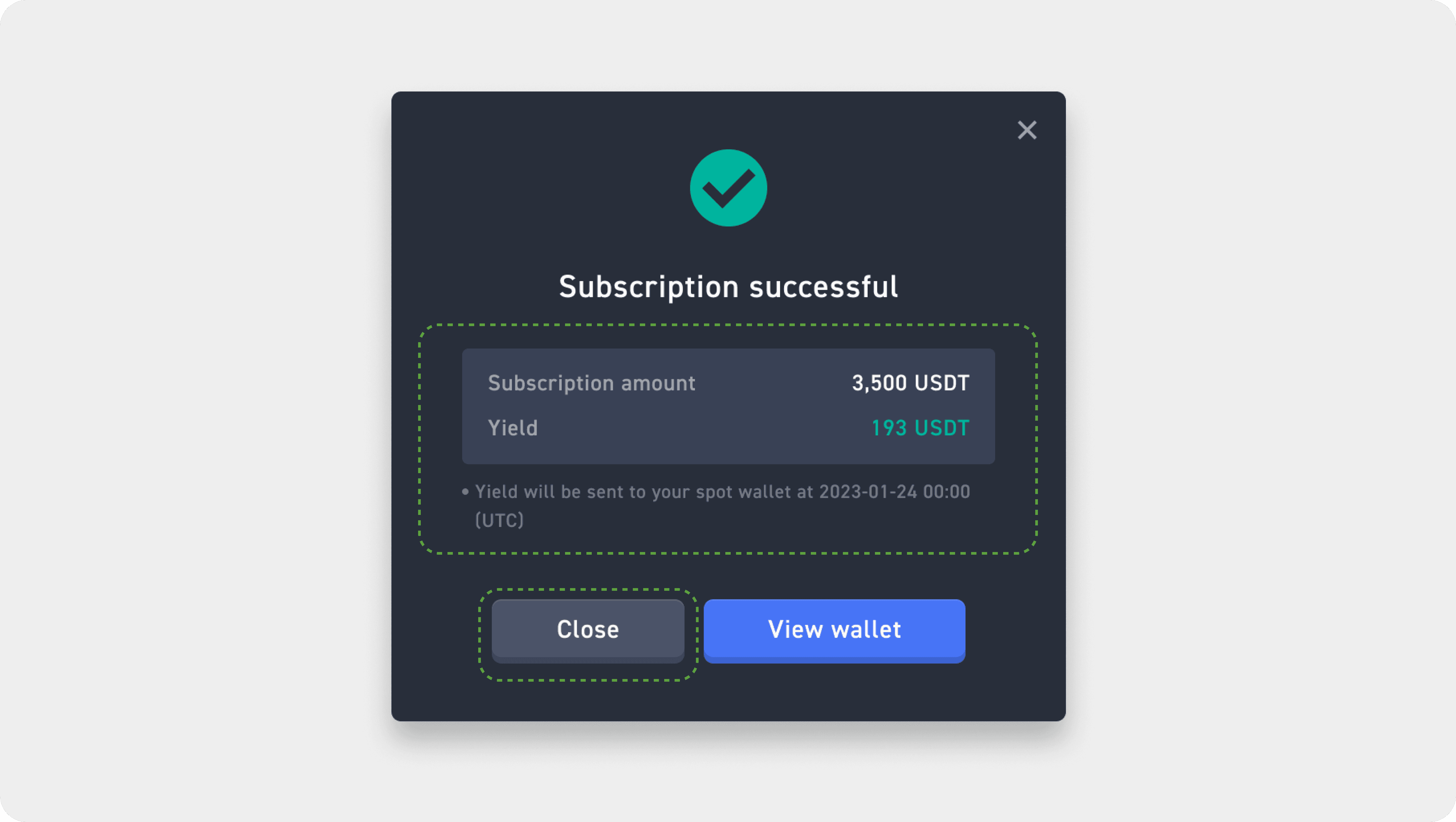
After
I removed redundant dates and kept only subscription amount and yield. Additionally, I replaced the CTA with "Close" to clearly signal completion.
process - Strategy Pivot
Being able to invest more wasn't attractive
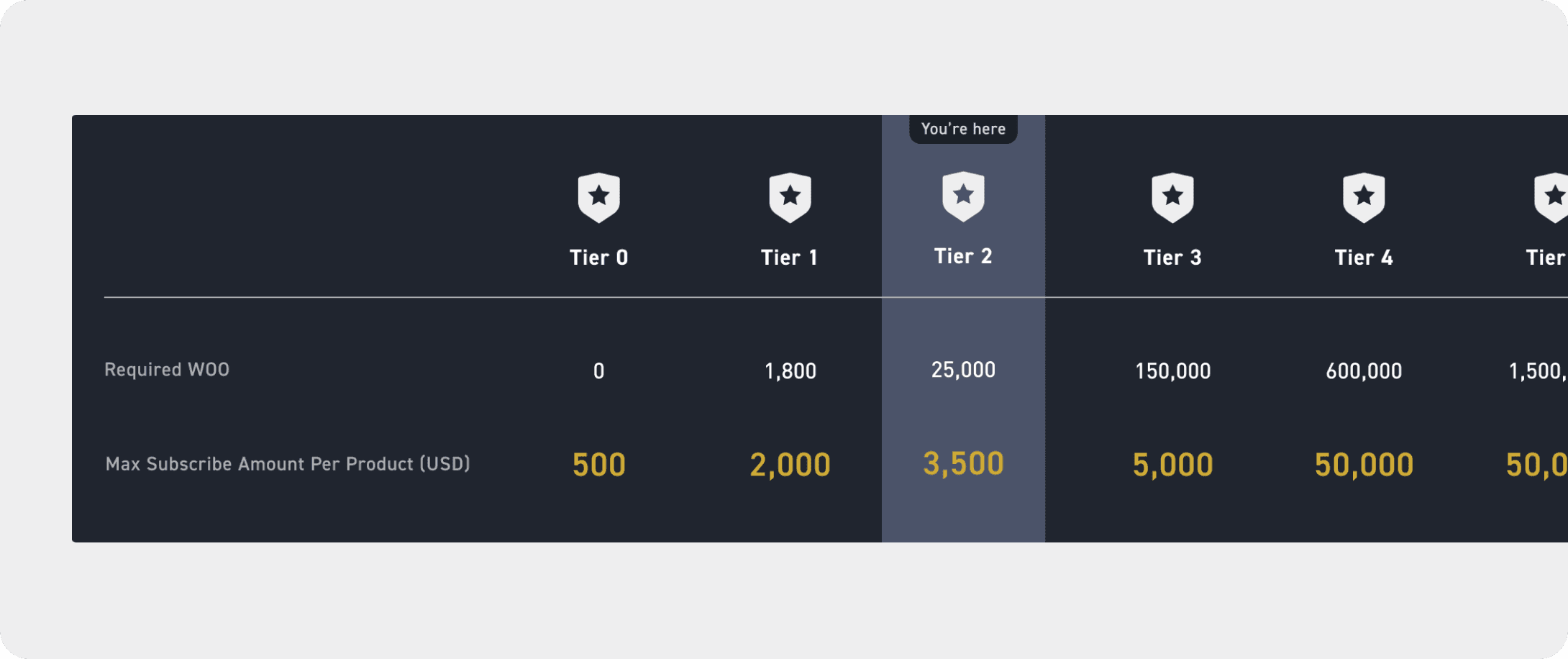
Before: higher-tier members can invest more
Usability testing uncovered a critical issue: users didn't understand why they should care about membership tiers. Being able to invest more on Earn products wasn't compelling, especially for beginners with limited capital. The complex tier table also added to the confusion.
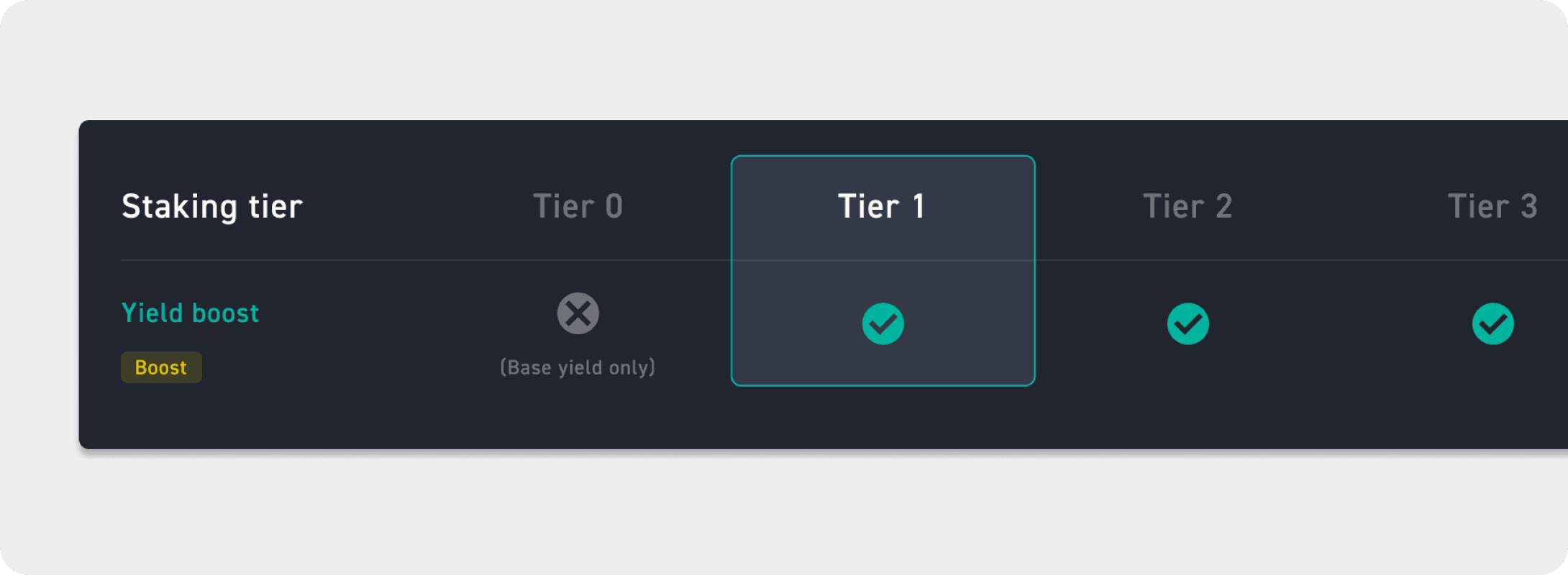
After: higher-tier members can earn more returns
I presented insights to leadership and we pivoted from investment caps to yield boosts for higher tiers. Internal testing confirmed the new approach was immediately clearer and more attractive.
solution
Beginner-friendly investment product
The final design brought together a clear tier-based yield-boost system, streamlined deposit flow, and simplified success messaging.
It drove a 60% jump in engagement and achieved an 11% conversion rate—double the platform average.
Final Design
solution - Scale
Scaling without overwhelming users
Besides web-based app, I also led the end-to-end design of the mobile app. After MVP launch, product adoption grew rapidly. To support future expansion, I needed to redesign the browsing experience for mobile.
Before
Users had to scroll multiple times to view all available options, making browsing and comparison inefficient.
After
I condensed product cards from three lines to a single-line format, allowing users to scan 3x more options and compare rates at a glance. The redesign improved discoverability for beginners and advanced traders alike.
Outcome & Impact
60% higher engagement, 2x conversion rate
At launch, WOO X Earn drove 60% higher platform engagement and achieved an 11% conversion rate, more than twice the platform average.
The strategic pivot from investment caps to yield boosts proved critical. Users immediately understood "earn more" versus "invest more," and removing caps eliminated barriers to growth.
Post-launch, the scalable card design supported 3x product inventory growth while maintaining clarity and ease of comparison.
Reflection
How this project shaped my design approach
This project reinforced two approaches I now apply when scoping projects and balancing user needs with business strategy:
1. Separate "can we build it?" from "will users want it?"
The tier cap system was technically feasible and strategically sound on paper. But testing revealed users didn't value it. Now I validate value propositions separately from feature feasibility, before committing to any design decisions.
2. Design systems for evolution
When we hit the scalability challenge, I learned how to ensure the system can evolve in the long term. Now I ask: "What constraints will this create at 10x scale?"